For care teams, healthtech & life sciences

Healthcare software development for connected care.

Build clinical applications, connect devices and records, and simplify care operations. Turn a specific workflow into software your patients and teams can use.

  • Clinical & operationalSoftware grounded in daily workflows
  • Connected systemsApplications, devices, and data exchange
  • From MVP onwardDevelopment, modernization, and support

What we can build

Find the workflow
you need to improve.

From a clinic's daily records to a healthtech product or a laboratory connection, start with the people, systems, and handoffs involved.

01 / PATIENT SERVICES

Patient portals & virtual care

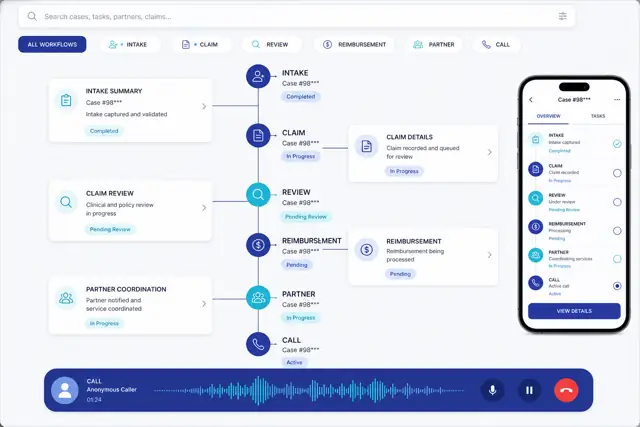
Make it easier to reach the right service, prepare for a visit, and stay connected with the care team.

  • Appointments, intake & patient communication
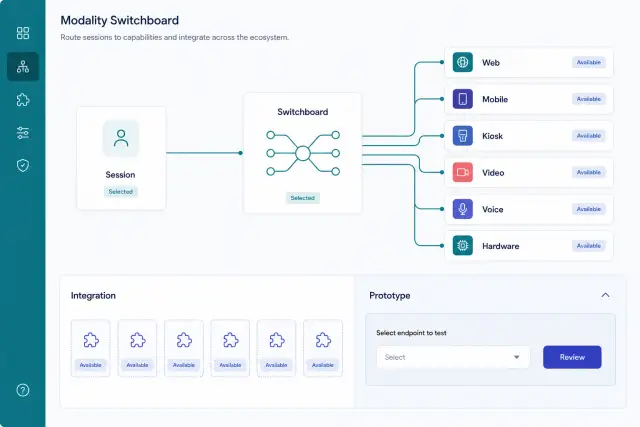
  • Video consultations & mobile experiences
  • Self-service portals & kiosk workflows
Explore a multi-channel product
02 / CLINICAL WORKFLOWS

EHR, EMR & clinical records

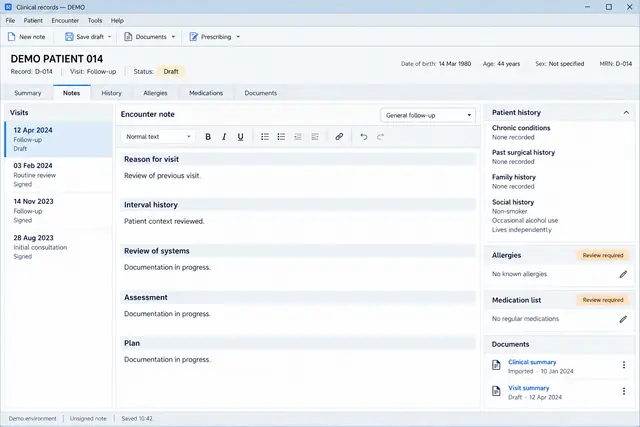
Build a focused clinical product or extend the workflows around an existing record system.

  • Patient records & specialty note templates
  • Clinical document exchange & integrations
  • Report access, review & audit history
Explore a clinic EMR
03 / CARE OPERATIONS

Care coordination, CRM & billing

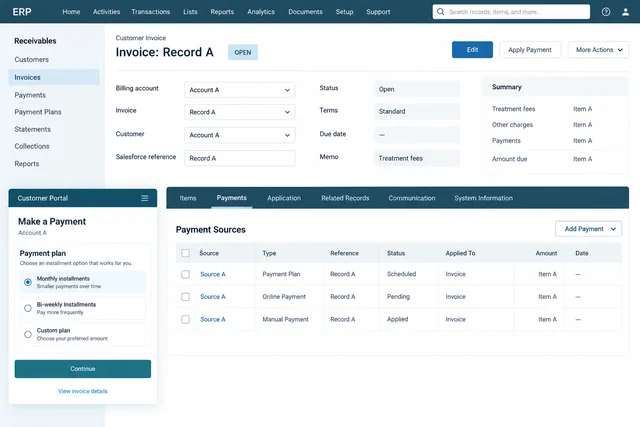
Support revenue cycle management (RCM) with connected patient billing, payment tracking, and accounts receivable, alongside day-to-day care coordination.

  • Patient billing, payment plans & receivables
  • Care CRM, referrals, claims & staff schedules
  • Service bookings & funding
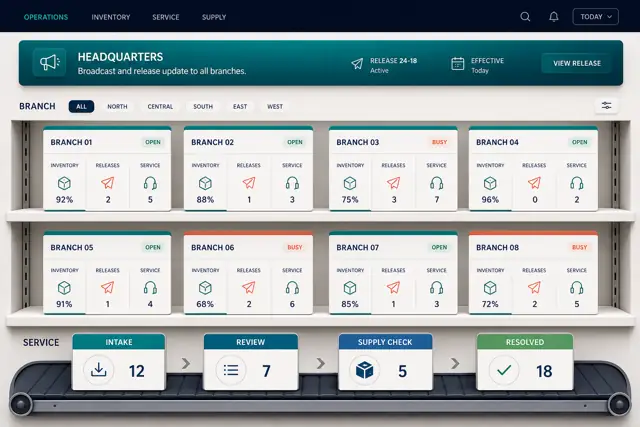
  • Pharmacy branch & supply-chain workflows
Explore connected billing & payments
04 / LABORATORIES & MEDTECH

Laboratory & device-connected software

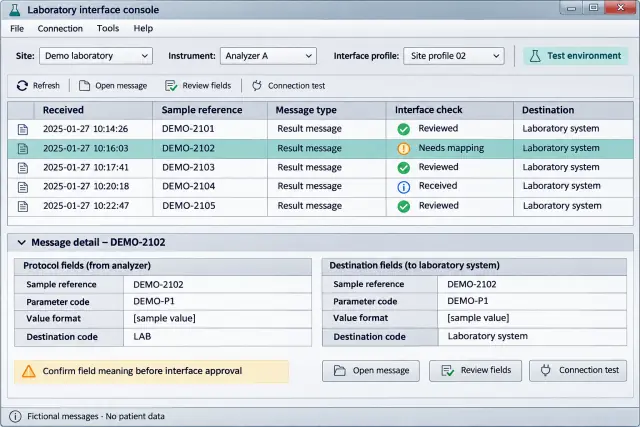
Bring instrument data, operator tools, and downstream systems into a tested workflow, with the device and its operating environment in view.

  • LIS connections & device middleware
  • Instrument interfaces & research data workflows
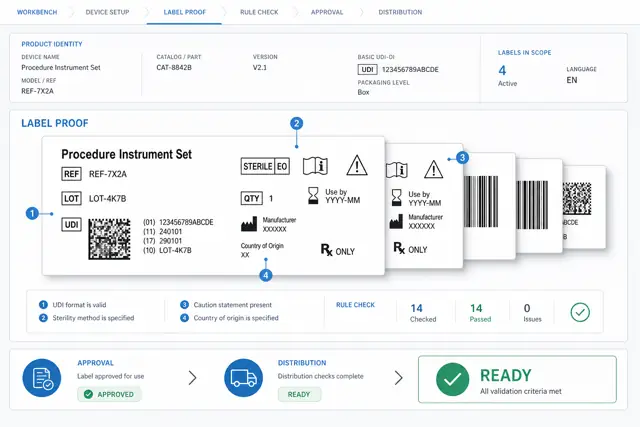
  • Medical-device labeling, UDI data & approvals
Explore laboratory middleware
05 / APPLIED AI

AI assistants & reviewed automation

Help people find approved information and prepare routine work, with clear limits on data use, tool access, and what needs human review.

  • Knowledge retrieval & care-service navigation
  • Document extraction & administrative support
  • Evaluation, permissions & AI running-cost review

Start with a defined information or operational task. Clinical decision features require separate specialist validation.

Explore an AI information assistant

Selected work

Healthcare challenges.
Working software.

Explore eight projects across billing, clinical records, care operations, devices, and healthcare products.

Connected systems & platforms

Make your existing
systems work together.

A new application is only part of the job. Plan how information moves between clinical systems, devices, and the platforms running your organization.

Clinical & laboratory connections

Review the available interfaces, map fields and identifiers, and test exchange behavior against the receiving system. Account for missing data, duplicate messages, access rules, and recovery.

  • HL7 / FHIR
  • Clinical documents
  • EHR / EMR APIs
  • LIS & device protocols

Operational reporting & platform integration

Connect healthcare, CRM, and finance records across the platforms your teams already use. Help operations and finance teams review payment status, accounts receivable, and treatment fees through tailored reports and saved queries for their daily work.

  • SharePoint
  • Salesforce
  • NetSuite
  • AWS
  • Microsoft Azure
Explore a healthcare billing integration

The integration plan depends on your vendor's interface access, supported standards and versions, licensing, and test environment. We confirm those dependencies before committing to a connection.

Security & delivery

Define the controls.
Test the whole workflow.

Bring clinical, operational, security, and engineering owners into the decisions that shape the application and its release.

  1. Map data and responsibilities

    Understand users, sensitive information, connected systems, and the regulatory requirements your team identifies.

    Shared starting pointWorkflow, data flow, owners, and open risks

  2. Build the agreed safeguards

    Define access roles, audit events, encryption, environment separation, and approved use of data before implementation.

    Reviewable scopeSecurity controls and acceptance criteria

  3. Validate with the right people

    Test normal work and failure paths. Review integrations and user acceptance with the people who operate the system.

    Evidence for releaseTest results, resolved issues, and approvals

  4. Plan a controlled transition

    Agree data reconciliation, cutover, rollback, documentation, and support before changing a live workflow.

    Continuity after launchRelease plan, handover, and support ownership

For HIPAA or other regulated requirements, we agree the engineering scope and validation responsibilities with your compliance owners. Software controls support that work; they do not establish organization-wide compliance on their own.

Ways to get started

Choose a useful first step.

Bring a workflow, an application, or an interface that needs attention. We can define a manageable starting point together.

A NEW APPLICATION

Scope a focused first release

Map the users and daily tasks, identify data and integration dependencies, and agree what the first working version must prove.

A DIFFICULT CONNECTION

Validate one integration

Use sample data and a test environment to investigate a device, vendor API, or data exchange before a wider implementation.

AN EXISTING PRODUCT

Improve it with your team

Review the code and delivery priorities, then take on a bounded change. A one-week trial can help assess fit when scope, access, and terms are agreed.

Tell us where the workflow breaks down or what you want to build.Discuss your project

Before we start

Questions worth
resolving early.

Scope, existing systems, data responsibilities, and the work after the first release.

Can you work with our existing EHR, EMR, or laboratory system?

We start by reviewing available APIs, interface documentation, data formats, vendor access, and test environments. The first deliverable may be a small integration proof to validate the connection and field mapping. Scope depends on what the existing system exposes and what its vendor permits.

How do you approach HIPAA and regulated software requirements?

We work with your security and compliance owners to define the requirements that apply to the project. The software scope can include access controls, audit records, encryption, test evidence, and release documentation. Organizational compliance also depends on operating practices, agreements, infrastructure, and other safeguards; a software feature alone does not establish it.

Can you modernize a system while it is still in use?

Yes. We can assess the application, identify a bounded component or workflow, and plan a staged transition. Data reconciliation, parallel checks, user acceptance, backup, and rollback need to be agreed before cutover. The approach depends on the application and its operating constraints.

What determines the cost and delivery timeline?

Workflow complexity, connected systems, data quality, access to vendor environments, and the required validation all affect the estimate. We agree a first release, dependencies, acceptance criteria, and review points before development. Changes to scope are discussed together with their effect on cost and timing.

Where does AI fit in a healthcare application?

Useful starting points include searching approved knowledge, navigating services, and preparing administrative work for review. We agree permitted data, source grounding, tool permissions, evaluation cases, and human handoffs. Features affecting clinical decisions need their own specialist review and validation; an information assistant is not a substitute for a clinician.

Can your team support the product after launch?

Yes. We can contribute alongside your engineering team or support an agreed application scope. Repository access, documentation, ownership, maintenance, monitoring, and response expectations are defined in the engagement. Ongoing work can include feature development and changes to connected systems.

Get in touch

Ready to build software that fits your business?

Tell us what you need to build, modernize, automate, or augment with AI. We can start with a focused discussion or a no-risk 1-week trial.

“A fantastic company to work with.” After the initial rapid development project, American Shipping Co. kept two Shinetech developers embedded for nearly four years, supporting internal and external tools and new AI initiatives.
Marc Greenberg testimonial portrait Marc GreenbergCEO, American Shipping Co. - 5-star Google Review

Response within 1 business day.